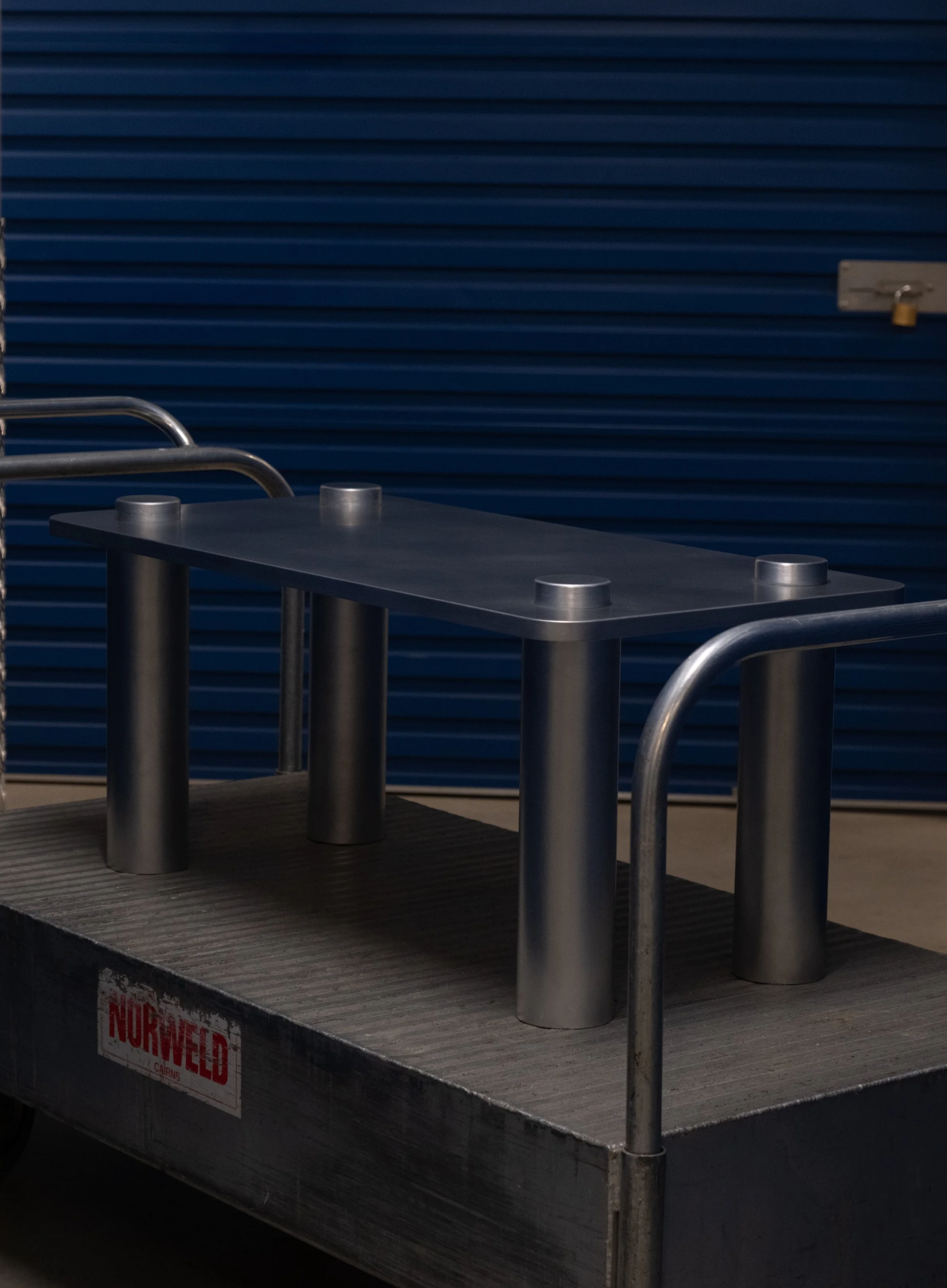
The Idea
The ‘O’ Ring Table draws on techniques and experiences from across the fabrication industry to explore an unexpected approach to furniture construction. Through experimentation with material, form and fabrication, the aim was to develop a connection that challenges conventional assembly, making the meeting of each component an integral part of the design.
The Design
The component I kept coming back to was the O-ring.
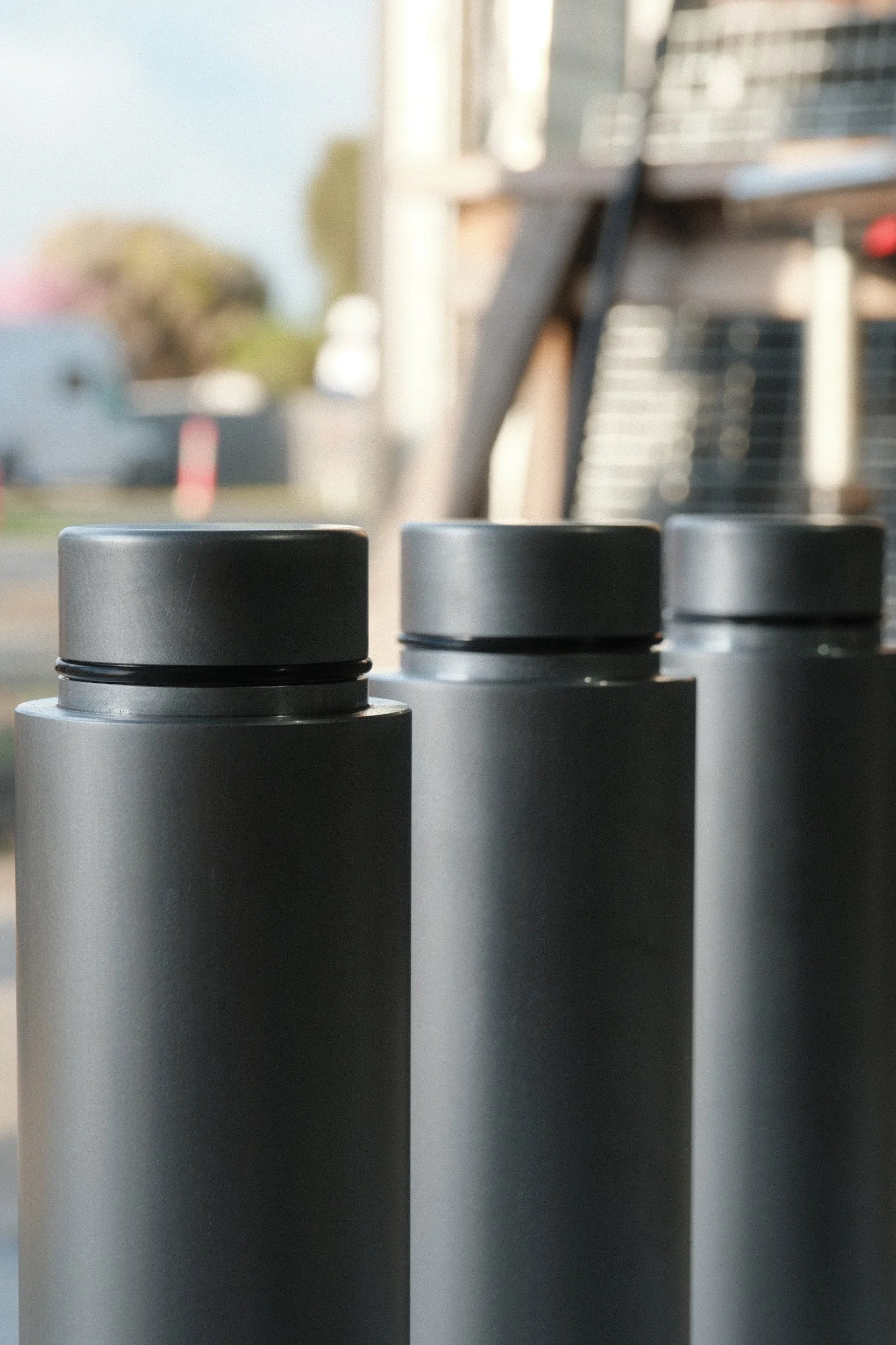
Made from nitrile rubber, an O-ring sits in a machined groove and when compressed between two surfaces, creates a seal. This pressure keeps oil inside a hydraulic ram, water inside a tap and air inside a cylinder.
O-rings are inexpensive and found in countless machines and everyday objects. Yet they rarely attract attention unless they fail.
Furniture typically relies on threads, bolts, welds, dowels or adhesives to join its components. The ‘O’ Ring Table explores an alternative.
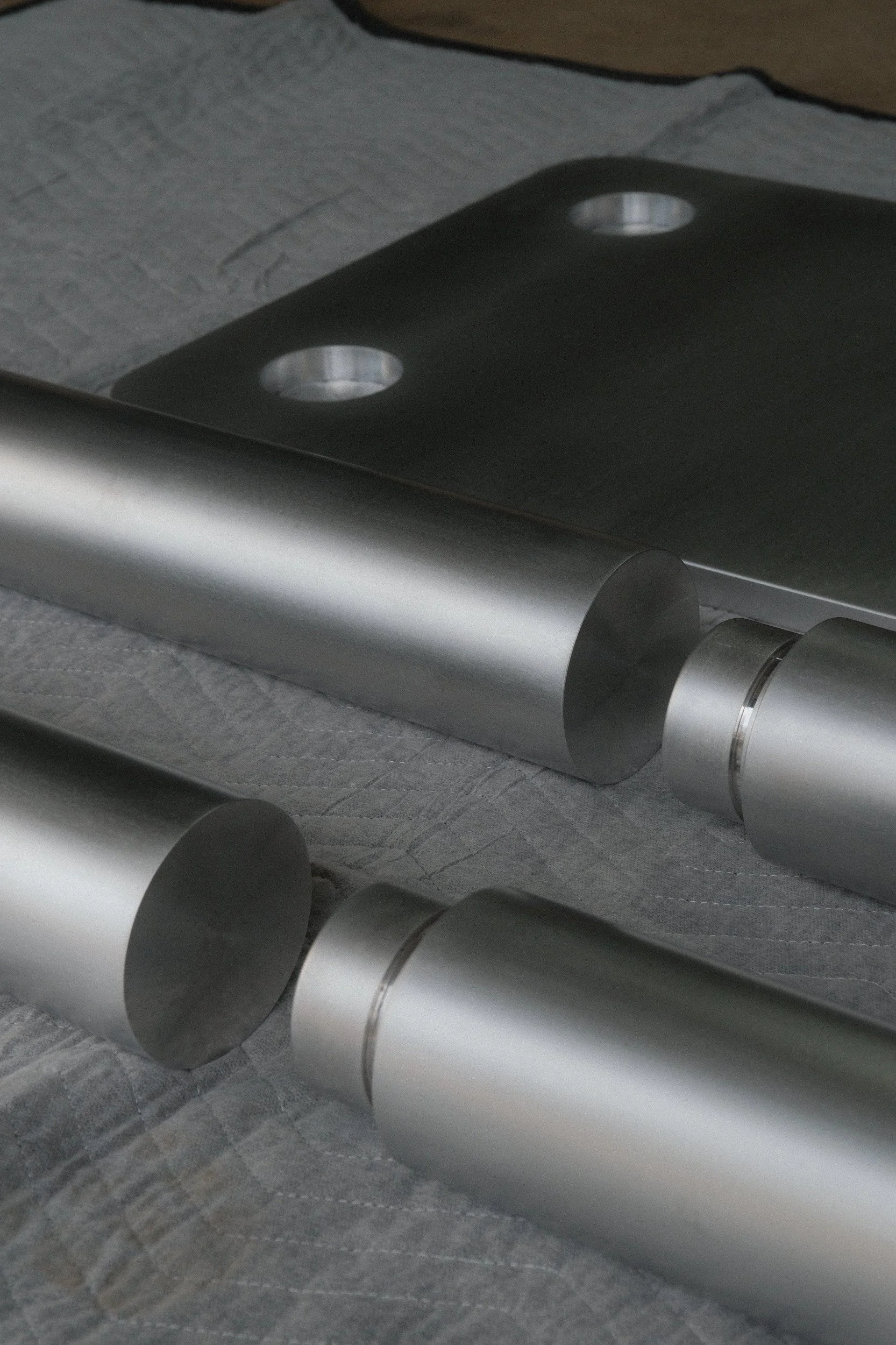
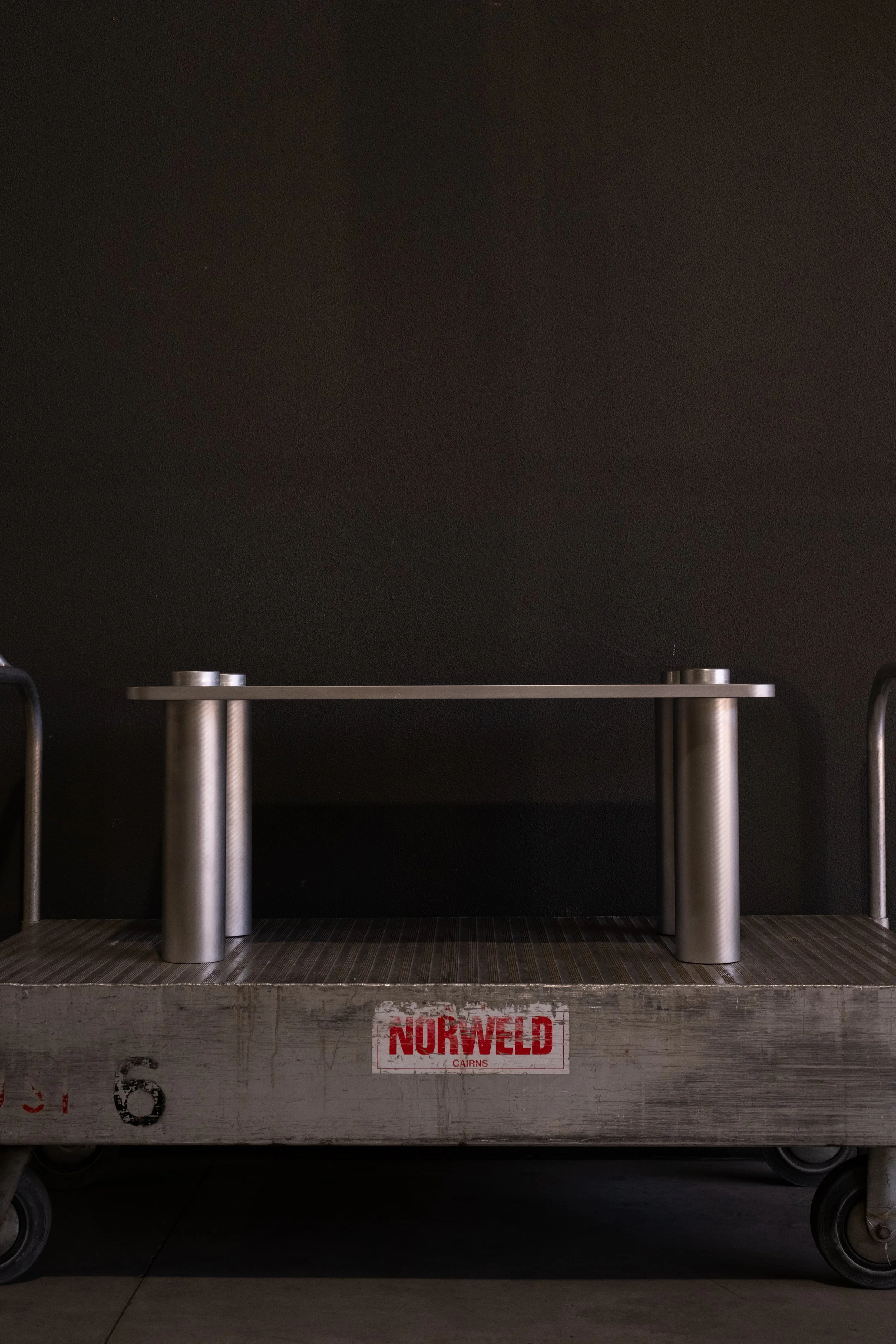
Four nitrile rings, each seated in a precisely machined groove on an aluminium leg, compress against the bore of the tabletop as the legs are fitted. Friction holds the legs securely in place, while a machined shoulder on each leg supports the top. No threads, welds, adhesives or mechanical fasteners are required.
The connection is secure enough for the table to be lifted by its top and moved as a single object.
Rather than treating the O-ring as a feature to be displayed, the design uses its inherent properties to explore a different way of joining two parts. A component designed to seal becomes a means of assembly, with compression and friction doing the work of a conventional fastener.
Construction & Assembly
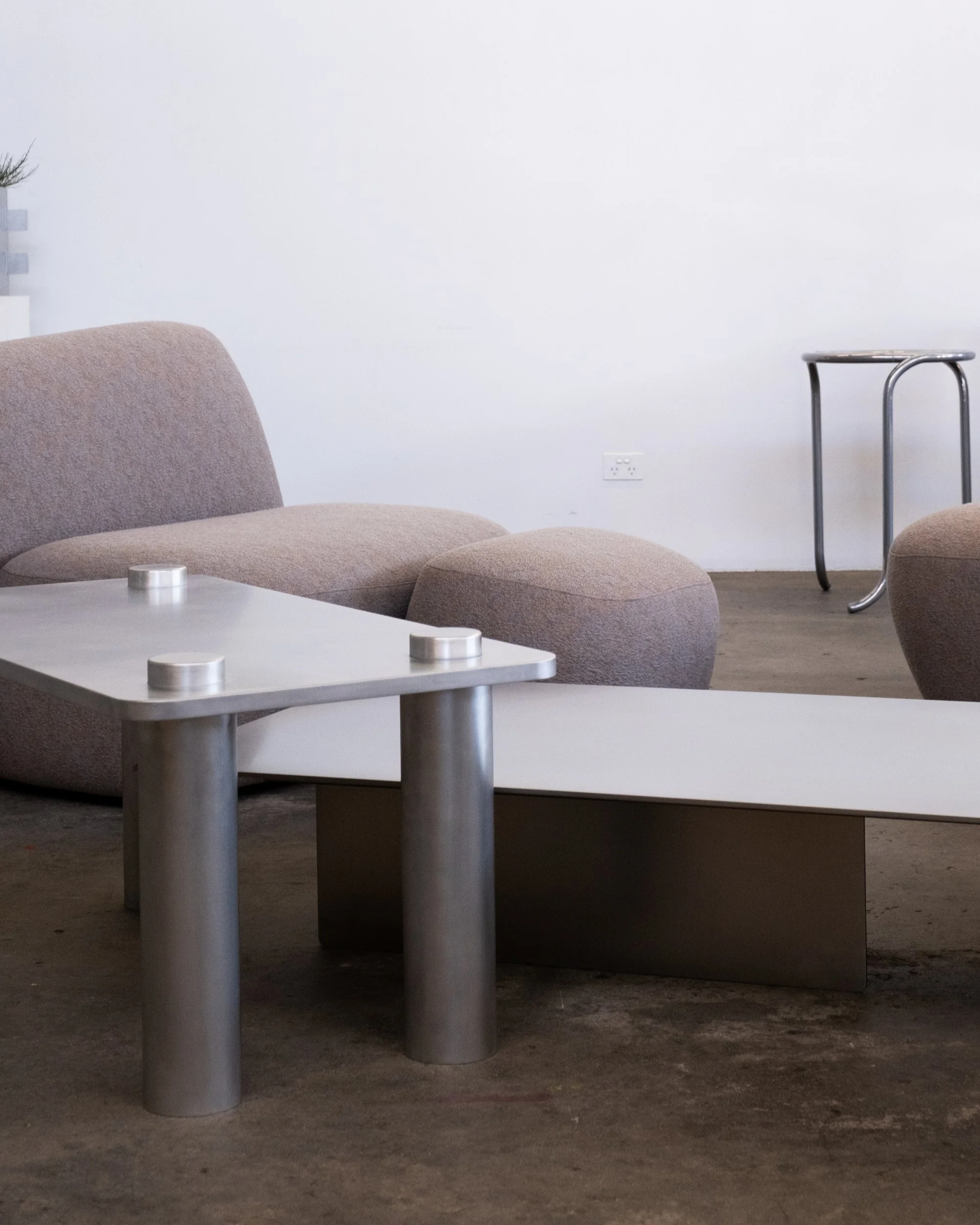
The table comprises five aluminium components: a 1000 × 500 × 20mm plate top and four legs turned from 100 mm solid aluminium round bar. Overall weight of table is 65kg.
Each leg is fitted with a nitrile O-ring before being inserted through the tabletop. With the top resting upside down on timber, the legs are tapped into position by hand using a mallet until each seats against its machined shoulder. Disassembly follows the reverse process, with each leg tapped upward from beneath.
The legs pass through the tabletop and stand proud of its surface, leaving the connection visible as part of the design. The O-rings remain concealed between the aluminium surfaces.
Purchase & Commissions
Each ‘O’ Ring Table is made to order in Port Elliot, South Australia, with a build time of four to six weeks.
Alternative shapes and dimensions are available by commission.
Delivery is quoted separately based on location.
Email me direct on cohen@workshop10.com.au
Product featured in ‘SLOT’, Adelaide Design Week 2026.